Offer:
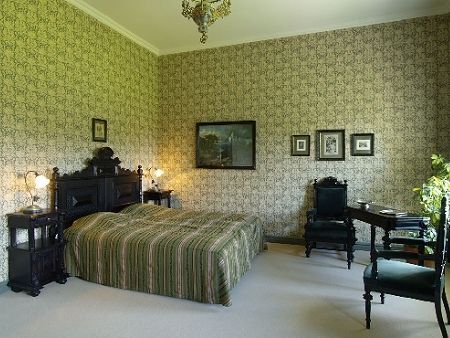
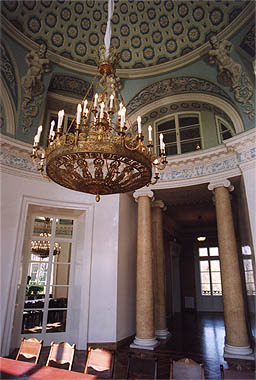
- On the second floor of Mežotne Palace, visitors can view Classical-style interiors and a small museum exhibition, which is gradually being expanded.
- The palace premises are available for rent for cultural and private events.
- The palace rooms and grounds can also be rented for photo sessions and filming.
More information about services and prices: https://rundale.net/mezotnes-pils/
About Mežotne Palace
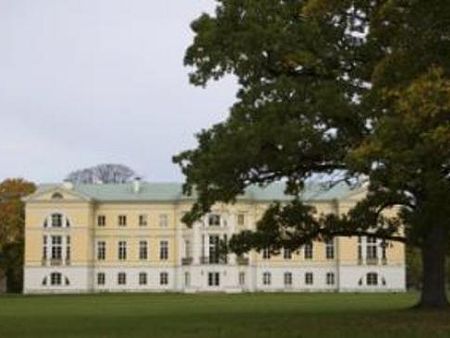
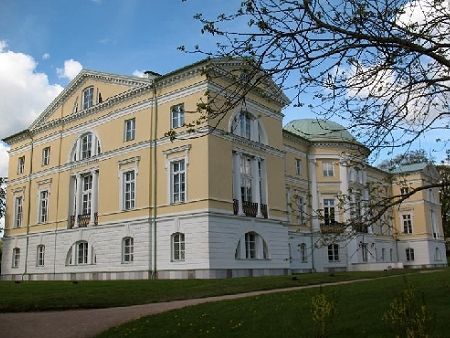
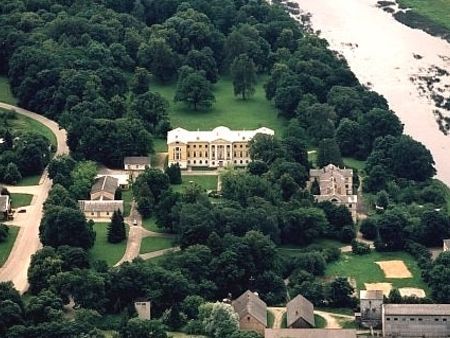
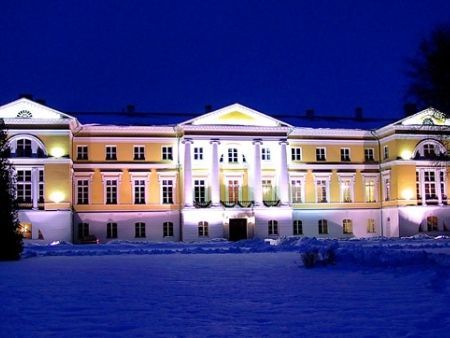
Mežotne Palace is located on the banks of the Lielupe River, about 70 km from Riga and 10 km from Bauska. Its history is closely linked to the Baltic German noble family of Lieven. The clarity of form and noble simplicity of this Classicist-style palace are further highlighted by the surrounding landscaped park. Since June 2025, the palace has once again been open to visitors.
The history of Mežotne Palace began in 1795, when Empress Catherine II of Russia granted the Mežotne estate for lifetime use to her grandchildren’s governess, Charlotte Margarethe von Lieven (1743–1828). In 1797, Catherine II’s successor Paul I made it the hereditary property of the Lieven family, and in the same year Charlotte von Lieven decided to build a new residence in Mežotne.
Before that, the Mežotne estate had been leased for several decades by Johann Friedrich von Medem, whose daughter Anna Charlotte Dorothea – the future Duchess of Courland and Semigallia and wife of Duke Peter – was born in Mežotne in 1761.
Construction of Mežotne Palace began in 1798 under the supervision of German architect J. G. Adam Berlitz. It was based on the design for Eleja Palace by Italian architect Giacomo Quarenghi, which Berlitz modified with side wings. Construction was completed in 1802, but the interior decoration (stucco and paintings) continued until 1817.
In September 1818, while accompanying Grand Duchess Maria Feodorovna of Russia on a journey to Germany, Charlotte von Lieven stopped at Mežotne Palace but left early the next morning. This was the first and only time the estate’s owner was able to visit her new home.
After Charlotte von Lieven’s death in 1828, the estate was inherited by her youngest son, Johann Georg (1775–1848), who completed the palace’s interiors. It then passed to Paul Hermann (1821–1881), during whose time the Mežotne estate’s farm complex was completed.
In 1881, Paul Hermann’s son Anatol Lieven (1873–1937) inherited Mežotne. He began his career in St. Petersburg but left the army in 1908 and moved to live in Mežotne. Following the agrarian reform of 1920, Prince Anatol Lieven lost all his estates except Mazmežotne Manor, on the opposite bank of the Lielupe, which remained in the family until 1939.
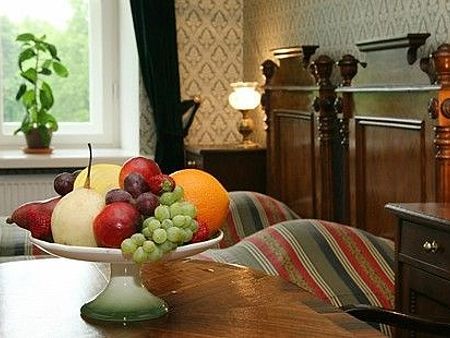
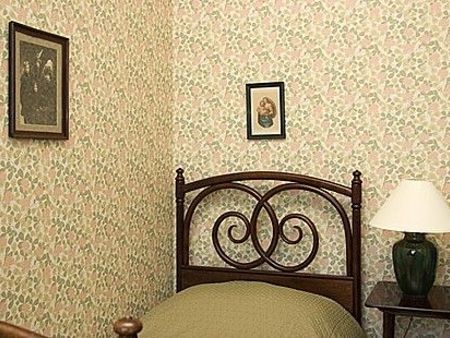
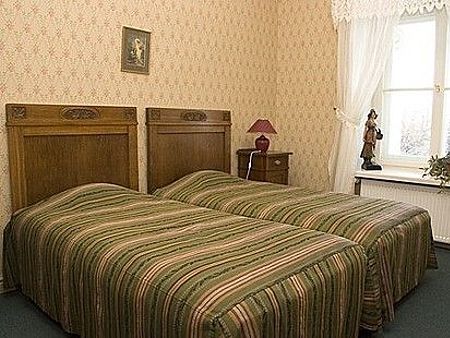
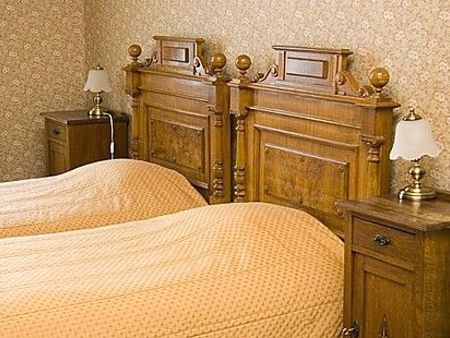
In September 1944, the palace was partially destroyed by Red Army artillery shelling. Reconstruction began in 1959 and lasted until 1989. In 2001, the palace underwent further restoration, and a hotel was established on the third floor.
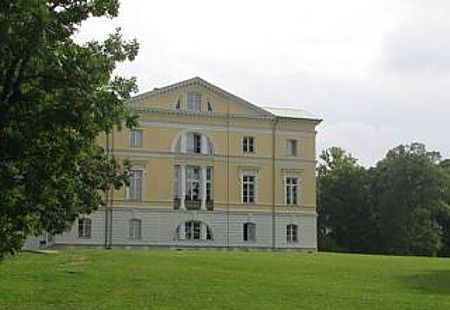
The courtyard façade with its four-column portico and the park façade with its semi-rotunda follow Quarenghi’s design. The ceremonial interiors are located on the second floor. At the center of the enfilade is the domed hall – the most significant Classicist-style interior in Latvia, modeled on elements of the Pantheon in Rome. The third floor housed living quarters and guest rooms. Archival materials show that the palace interiors were once filled with artworks and luxurious furniture, testifying to the aristocratic grandeur of the Lieven residence.
Next to the palace lies a 10-hectare park, the creation of which began alongside the construction of the palace. It is one of the best-planned and best-maintained landscape parks in Latvia. | 





; "Photo of the day")